
Sustainable Tourism and Cultural Heritage
December 4, 2025
Sustainable Tourism and Cultural Heritage
Trend Analysis: From Mass Tourism to Experience Tourism
Turkish tourism has proven its strength by generating $9.45 billion in revenue in the first quarter of 2025. However, the qualitative shift behind these figures is far more significant. Tourists are no longer just seeking the “sea-sand-sun” trilogy; they are seeking cultural depth, sustainability, and authentic experiences. In the first quarter of 2025, 52.5% of visitors stated their travel purpose as “sightseeing, entertainment, sports, and cultural activities.”
This trend was culminated in the inclusion of four villages from Türkiye on the United Nations (UN) Tourism Organization’s “Best Tourism Villages 2025” list: Akyaka (Muğla), Barbaros (İzmir), Anıtlı (Mardin), and Kale Üçağız (Antalya). These villages stand out as destinations that support local development and preserve cultural heritage by embracing sustainable tourism principles.

In-Depth Destination Analysis
This section of our report contains detailed destination analyses that will form the basis of this blog post.
Anıtlı (Hah), Mardin
Anıtlı village, formerly known as “Hah,” in the Midyat district of Mardin, occupies a strategic position on the Silk Road. The village’s most important structure, the Church of the Virgin Mary, is built on a 2,000-year-old monument and holds great spiritual value for the Syriac Orthodox world. The church stands out with its square plan and central dome, architecturally similar to the Deyrulzafaran Monastery.
Tourist Attractions: The village is home to the ruins of the Mor Sobo Cathedral. It also offers gastronomic delights such as Syriac wine, “ikbibet” (stuffed meatballs), “alluciye,” and homemade chickpea flour bread.
Cultural Context: Located in the heart of the “Turabdin” (Mountain of the Servants of God) region, the village is a unique destination for religious tourism and history enthusiasts.
Barbaros, İzmir
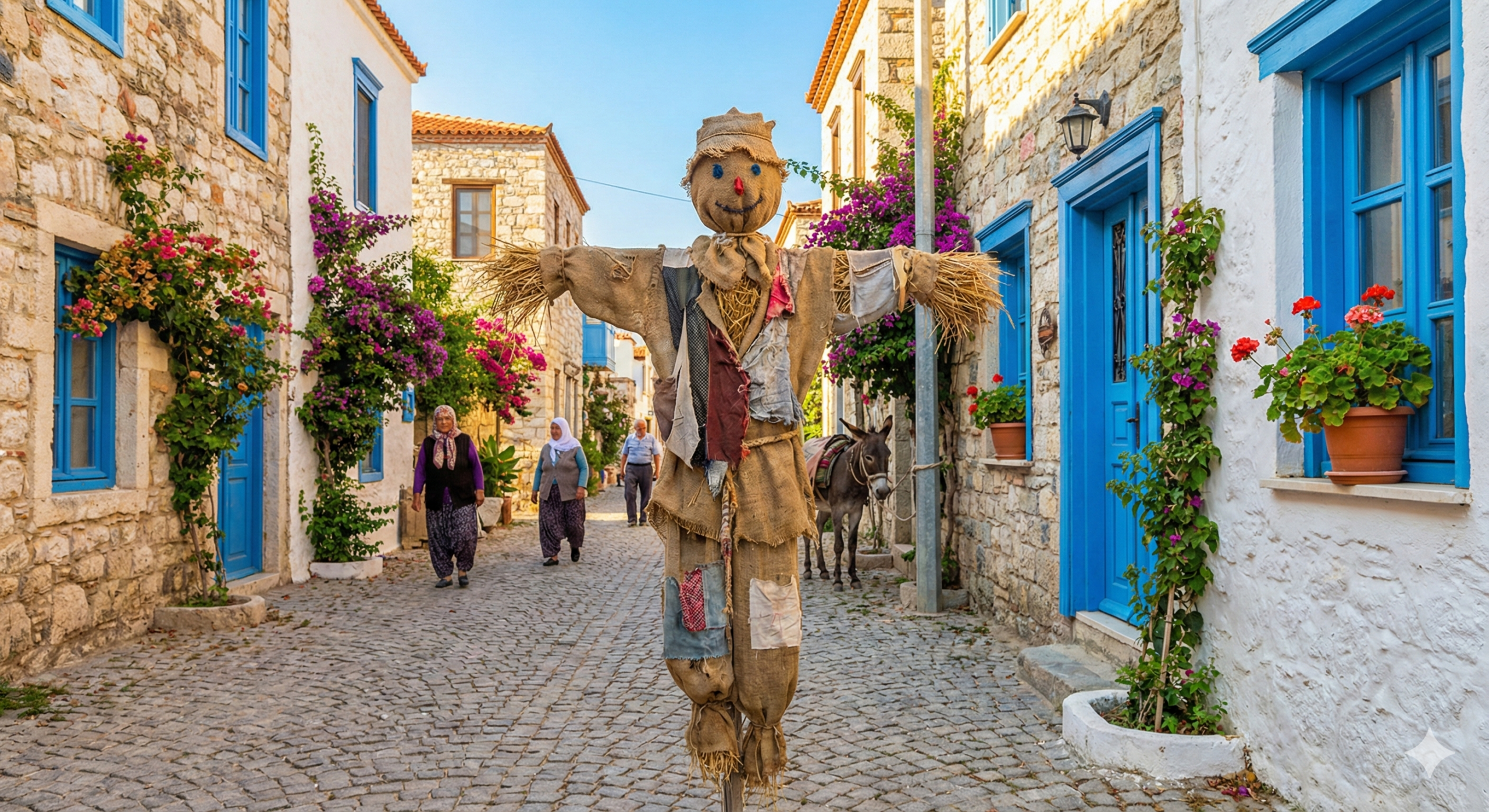
Barbaros Village, located in the Urla district, is known for its creative vision, combining agricultural production with art. The village’s iconic “Oyuk Festival” (Scarecrow Festival) is based on the idea of transforming scarecrows used to protect fields into works of art.
Çat Kapı Evleri (Cat Kapı Evi): The village’s “Çat Kapı Evi” model allows visitors to visit houses bearing this inscription and sample local dishes (katmer, çalkama, and eggplant fish) for a small fee.
Sustainability: The “Water Heritage Map,” created to preserve the village’s water heritage, offers a 13-kilometer walking route connecting wells and fountains.
Kale Üçağız, Antalya and Akyaka, Muğla
Kale Üçağız is a fishing village nestled on the Lycian Way, on the shores of the sunken city of Kekova, where history and the sea intertwine. Akyaka, with its “Cittaslow” title, is the symbol of sustainable living with the icy waters of the Azmak River and its unique wooden architecture.
Türkiye’s 2025 Tourism Villages
In an era of increasing monotony and environmental concerns caused by mass tourism, travel enthusiasts are now turning their attention from “all-inclusive” hotels to villages where nature and culture throb. The most proud reflection of this global transformation was recognized by the United Nations (UN) Tourism Organization’s “Best Tourism Villages 2025” list. Four unique villages in Türkiye—Muğla’s tranquil Akyaka, İzmir’s artful Barbaros village, Mardin’s ancient stonemasonry-adorned Anıtlı, and Antalya’s sea-splitting Kale Üçağız—have earned their places on the world’s most prestigious sustainable tourism list. These villages offer invaluable experiences for the modern traveler, not only for their visual beauty but also for their vision of preserving local culture, preserving ecological balance, and leveraging tourism as a tool for local development.
Each of the villages on this list represents a different piece of Anatolia’s rich mosaic. Mardin’s Anıtlı Village (Hah), with its strategic location on the Silk Road and millennia-old Syriac heritage, is a living open-air museum. Located in the heart of the village, the Church of the Virgin Mary, whose foundations date back 2,000 years, captivates visitors with its graceful stonework and spiritual atmosphere. A day spent in Anıtlı goes beyond seeing historical structures; it transforms into a gastronomic feast with mouth-watering local delicacies like Syriac wine, ikbibet, and chickpea bread baked in stone ovens. This is a unique destination for those who want to experience history firsthand, not just its dusty pages.
As we reach the fertile lands of the Aegean, we are greeted by İzmir’s Barbaros Village. This is a visionary village that blends agricultural tradition with modern art. The famous “Oyuk Festival,” which transforms the scarecrows erected to protect the fields into works of art and humor, draws thousands of visitors to the village every year. But what truly makes Barbaros special is its tourism model built on intimacy. As you wander the village streets, you might visit a house with the inscription “Çat Kapı Evi” (Cat Kapı Evi) on the door and savor the owner’s fresh katmer (a type of katmer) and black mulberry sherbet. Along with Kale Üçağız, Antalya’s sunken city, and Akyaka, a haven of peace on the banks of the Azmak River in Muğla, these four villages are poised to reshape your understanding of travel in 2025. If you’re looking to not only explore but also enrich your destination and connect with local stories, these routes are perfect for you.

